It was not exactly the Yellow Brick Road from Nairobi to the South Rift Valley. I'd got used to potholes by now but this was indescribably wild. "Road" is really not the right word for the vague and rambling path that had been sort of hewn through rubble, salt lakes, savannah, hills and such. I don't know if there is a word for it, actually! I was just glad to be in a brand new and enormous Toyota Land Cruiser (it had been picked up from the showroom the very morning that John Kamanga, the director of the campsite project I went to, drove me there).
The camp, called Sampu Camp, is a new project that is intended to be a model to be copied throughout the South Rift area. South Rift is composed of several conservation areas and quite a number of group ranches owned by Maasai communities. They are trying to develop camps such as this one to open a corridor for tourists from the Maasai Mara to Amboseli park - to capture the business currently going to one park, then driving all the way back to Nairobi, and then driving all the way to the other park. Since South Rift connects the two parks, and in fact all the wildlife you see in either park transits this corridor regularly, visitors wanting the real safari experience would be much better off taking this route. Since it is a fully community-owned and run operation, it takes time to get off the ground. Getting all the various parties and chiefs and so on to agree at each step is no small feat, and often there are ruffled feathers between all the various 'important people' over who gets to be chairperson, treasurer, etc and then what gets lost is 'what does the chairperson actually do for the camp anyway and who makes sure that gets done???'. Nevertheless, Sampu has been the recipient of several grants and some significant NGO assistance, and is quite impressive in its potential and location.
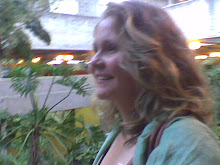
So there I was, one little blond Canadian girl going into Maasai land to offer some service training, infrastructure and suggestions for making this camp a successful business and a model that could be copied.
My first discovery was one of the best, and provided the most wonderful conversation starter for the duration of my stay, particularly given that Maasai culture in its most traditional form is, ah, not entirely supportive of women's rights and power, shall we say ever so diplomatically. My discovery was made upon introducing myself to the half dozen Maasai men employed at the camp: "Melanda" is very, very close to a fairly common traditional Maasai name. For BOYS. Well that got us all off to a good start! I got every one of them laughing about how I had finally found 'my tribe' in the South Rift and actually I'm a Maasai man but just in a very good disguise.
As it happened, the young men working at the camp were very much in the 'crossroads generation' of Maasai, very passionate about conserving their rich and amazing cultural heritage but embracing a great deal of Western thinking about the role of women, and what they have to offer intellectually and socially. I was happy to remind them, as we talked and shared our stories and information about our cultural, ethnic and national backgrounds and norms, that actually Western society has a rich and illustrious history of repressing and ignoring women too, and it's only been in the last 100 years that we've had a voice at all, anywhere in the world. I hate to allow people to carry around idealistic and fantastical notions about how 'advanced' and 'good' Westerners are when really we're just different and have our own bundle of good, bad and ugly like every other culture out there.
Another amusing discovery (well, I had to laugh or I would have cried) was that most people in Kenya believe that Canada is part of the United States. One person asked if Canada was in Texas. Another said, solemnly, "all very learned people know that Canada is one of the United States of America". It took me many, many evenings of gentle coaching and adamant lecturing before they could believe that in fact, I come from an independent nation with the queen on our money, a Prime Minister (I left out the part about how our current PM wants to be up Bush's bum like Tony Blair and is a total US wannabe, that would have been a detriment to my case) and government run health care for all (I left out the part about how the right wing nutjobs in our country want to dismantle it and love to tell lies about how it 'isn't financially possible', because again, that wasn't my point!). We finally understood each other when I asked them "is there a country in the region here that Kenyans have some political difficulty with and would not want to be mistaken for? A country whose individual citizens you like, respect and feel neighbourly towards, but whose government and international policies you object to and strongly oppose?" They said, yes, that would be Somalia. Aha! When I then said "well, you telling me that Canada is part of the US is like me telling you that Kenya is a province of Somalia". They got it at last!
As to the environs of the camp, South Rift is a few hours drive south from the Ngong Hills (of the movie), which are just outside Nairobi. Nairobi and the Ngong area were historically all Maasai land, but as urbanization took hold of that water rich area, the Maasai, nomadic herders, were crowded into the south. They had always occupied the southern areas, all the way into Tanzania, but had previously also stretched north into Nairobi (the name of which is a corrupted version of a Maasai word "Nilofi" or something like that, which is some reference to water from what I've been told). As a group, the Maasai now run the gamut from extremely traditional, truly nomadic herders still living only on meat, blood and milk, to those who have added farming to their livelihoods, to those who have turned to farming entirely, to those who have started running businesses or working outside the home for their incomes. Most combine all of the above elements, so the men I worked with and trained all had farms, and also had herds, and also had jobs! Those who were married had wives who helped with the farms, children who did the herding when not at school, and some hired outside workers to help with the farming and herding. A very busy people!
On one afternoon during my stay, I was given a tour of the local community area, and was fascinated to see the combination of traditional flowing red and purple cloths, stretched earlobes and decorative beaded necklaces and headdresses, to suits and shirts - and the differences had nothing to do with what their roles were or what they were doing. Some herders wear the draped cloth and beads, some wear western attire. Some business people wear business attire, others are cloaked and beaded. It's all a colourful jumble. I visited a "boma", where the "warriors" live for a period of time - this is a rite of passage for young Maasai men, who are circumcised at age 18 as a 'becoming a man" initiation rite and then live in huts together for a few years. Traditionally they would have gone out and hunted lions - I think you have to have a scar from a lion hunt to be a 'real' Maasai man - but now they are part of the conservation efforts and don't hunt but rather steward the wildlife. In this phase they grow and braid their hair quite long, and then when they leave the boma they shave their heads. Women similarly have initiation rites, which horrifically also include circumcision (which is actually referred to by human rights organizations seeking to ban the practice as "female genital mutilation" which is honestly a more accurate term for what is done to these girls). During my visit to the local health centre, which was donated and built by the British Army and serves the local community, the doctor told me that this practice causes terrible medical issues for women and also complicates childbirth enormously. There are a lot of such issues being worked on slowly as this culture, which is beautiful and strong and tied to the environment and nature in amazing ways, begins to reinvent itself in light of the growing focus on the rights of women. It is a fascinating struggle to see up close and not at all a simple matter to address.
The camp itself was amazing. It is graded "deluxe", not luxury, which I appreciated, because it allowed the real flavour of the 'safari' experience to seep into you while you were there, not having some veil of ridiculous and unnecessary convenience between you and the wild. Not to say it was uncomfortable, because it had great amenities. It made me feel like I was on Safari for real, or in the movie Out of Africa or something. Each tent was like a small and rather basic cabin, but with a fully equipped bathroom at the back, beds, and tables and chairs. The tents were placed around the outside of the camp and each had an extraordinary view -- some overlooking the river, some facing the escarpment and hills, some facing across the grasslands. The Mess Tent had the best view of all, with a view all the way to the mountains dividing Kenya and Tanzania. The camp was open but guarded and patrolled 24h/day, and as it happens the animals tend not to come into human occupied camps because they fear the light, noise and unfamiliarity of the strange creatures inhabiting the camps. This was not a lot of reassurance at first (what about lions? oh they don't come in here. Yeah, okay...), but as I grew used to it, I appreciated not being walled in, and being right out in the middle of the true wilds of Africa. And, since I'm here at the UN offices borrowing a computer to type this, I obviously was not eaten by a lion.
I did not actually get to see any predators at all, though on the game drives we did I got to see zillions of zebra, lots of Maasai giraffes (darker than the Rothschild variety), wildebeest, dik-diks (small antelopish things with no horns), impala, and one very unhappy buffalo. Apparently Maasai don't fear any animal at all, save for the lone buffalo -- these are the males who have failed to get their own herd and are eternally angry about it and take it out on everything they see. Even lions don't usually go for them, they are so dangerous. If you meet one whilst walking, you are likely to be killed on the spot if it's in a bad mood, which they usually are. So seeing one, even from inside a sturdy Jeep, was a bit of a nervous thrill.
My other wildlife encounters were of a smaller yet more frightening variety. Three cobras were found at the back of a very messy supply tent that we cleaned out, and scorpions were all over the place inside crumpled materials or under boxes that had not been moved in a while. I found three in my tent on one night. Needless to say, I was rather paranoid and checked every nook and cranny with my kerosene lamp and then again by the light of my cell phone (just in case the different light wavelengths revealed different things) before I went to bed each night. I also stripped and re-made my bed each time before getting into it, in case anything had crept into it while I'd been out.
There is so much more I should write about my week there - it was astounding and I can hardly wait to go back again! But for now I need to go, because I'm only borrowing this PC and I have several meetings with people here at the UN and later at the Red Cross that I now have to leave for. So I think I'll send another chapter from home - I'll be back in Vancouver on Sunday night.
Sending greetings and happy wishes and big hugs, and hoping to see most of you (who are in Vancouver) soon and share photos... I sign off as:
Melanda, the honorary Maasai man!
Tuesday, September 2, 2008

A Carnival, a Piece of Meat, a Punchline: Me (January 2007)
Having just survived the climb up and back down a termite-riddled, rickety lookout structure and having my breath taken clean away by the stunning view of Mt. Kenya’s silhouette in the misty dawn, I feel like it’s time for Chapter 4 – my last from Wajee. Today will be my last day here, and will be a busy one when it starts, trying to get as much done as possible.
I warn you all now, this one is a long one because I’ve had a jam-packed weekend and many stories to share!
Now where did I leave off? So on Friday last, Jagi arrived late at night. Everyone had been hustling all day to sparkle up the place for his arrival, but it was darkest night when he pulled up so we had to wait until the next day to see his reaction to all the improvements. (He was thrilled – by both the physical improvements and the infrastructure we’d put in place… this has to be the first time anyone has ever said the following sentence to me: “the auditors will just love what you’ve done here!” Wish I’d had a tape recorder for that one!)
The next morning Jagi took Flora and me on a day of touring the local sights and attractions that cemented forever my utter love of this part of the world, and he was the most passionate and knowledgeable guide you could hope for.
The routes to get to each of the local attractions are adventures in themselves and ideally would be done by mountain bike or on foot – but we had many places to see in one short day so took his Land Rover. Now, in paved and sterile little Vancouver, a Land Rover is no more than a big phallic symbol for a weak male ego – but in Africa, it just makes good sense. We passed a truck (a ‘lorry’, in the Kenyan terminology which takes its sensibilities from the UK, owing to its colonial past) coming down a steep hill and I feared it would lose its brakes and go hurtling into a stream never to be extracted! On either side as we barreled and bounced past were cows, goats, sheep, children, chickens, geese, and here and there women laying colourful laundry out to dry in a field. Then from the forest on one side emerged two traditional Kikuyu women, faces painted, walking with heavy burdens on their backs as women here often do. As they walked and talked, they were all the time busily weaving their colourful traditional baskets (I bought two such baskets at the Mihuti Market recently – they are gorgeous and are made from grass fibres on the vertical and re-used brightly coloured plastic bags on the horizontal weave).
First to Jajara Falls (meaning “rocky” falls in the local tribal language of Kikuyu). Hiking along a narrow trail, pushing through tall grasses with sharp edges, thorn bushes, fragrant herbs… crushed underfoot, they release a spicy green aroma with each step. Steep slopes, sometimes dry and crumbly and giving way, sometimes muddy and slippery. Rushing water louder as we approach, fresh cool moist air breaking the blasting heat of the midday sun, blessedly. Sweat trickles, tickly-prickly down the back! At last, a lovely cool perch on a rock by the falls, the soft mist soothing our burning skin.
Next, Igutha – which boasts both a waterfall and an organic coffee plantation/factory. Rows and rows of glossy dark green coffee plants with berries growing redder, soon to be picked and peeled and sorted. The water sorts the beans, how clever and simple! Low grade floats, higher grades sink – fascinating devices and special channels sift them into three distinct grades, and into chambers where they are washed and drained. Then to long, long drying racks in open fields, where they are sorted by hand and sun-dried. Off to market next go these happy beans, to be priced according to grade and shipped to roasters in North America and Europe who turn them into the shiny brown goodness that we grind up and make into our cappuccinos and espressos! Here, where the coffee grows and where people sweat and toil to sort and separate and husk the beans, they get only Nescafe instant packets… from the lowest of all the grades! Such a shame, that the growers never taste the highest quality product but instead export it all. Do we taste their sweat and labour when we sip our morning coffees, I wonder? Do we taste the red African earth and the rich rains, the yellow sun that dries this product and burns into the shoulders of those who pick through it for us, bean by bean? I think when I come home, I will taste all those things in my coffee forever. (And I’ll try to buy Organic, Fair Trade coffee as much as possible, too!)
Our next stop was fascinating. A local farmer blessed with particular ingenuity, Joseph Mwengi, has for many years now run his home on bio-gas. He has one cow, and its poop provides for all his family’s energy needs! Its stall is behind the house, on a ledge about 12 feet up from his garden/farm out the back. Its droppings are channeled into a deep cylindrical hole with a domed thingy on top that sort of floats on the manure sludge (yeah, ew, I know – but you know what? Not much of a smell!) – and by natural compression the methane is forced up a pipe that leads back into the house. They use the methane for lamps in each room and for the kitchen stove. He has created a variety of special portable clay ovens, which have small holes into which pipes send the methane. Voila! Perfect gas burners for each and every cooking task. And by the light of the lamps he has schooled all his very bright and ambitious children. His daughter, Purity, welcomed us and gave us a tour of their amazing home, and let us sign their guest book. It was filling up gradually with wonderful encouraging words left by tourists from all corners of the globe. The Mwengi farm is becoming rather an attraction in the area for visitors both Kenyan and international – it is a model of sustainable living, requiring no charcoal which is the standard energy source in Kenya, and it could be applied to many households. Apparently, last year, a German couple visited and were so amazed that they have been trying to get Jagi to find out the exact specs of how this bio-gas plant works, so that they can secure development funding to expand it. Potentially the farmer could sell the excess gas produced, and/or go into business setting up similar rigs at other homes. This same clever farmer has also solved his water problems by building the most extraordinary well/pump system that I can’t begin to describe… luckily I took pictures! It is made of an old tire, some tubes, some scrap wood, rope and some bicycle parts. He turns a handle and up comes water for his farm – or household – on demand.
Our last stop of the day was in Mukurwe-ini, the nearest town centre to Wajee (‘town’ meaning a few blocks of shops amid mostly fields and trees, of course). Along the way, we saw a lorry buying milk from farmers carrying big metal pails of the stuff. This milk lorry has a regular weekly route in the region, and dairy farmers – who have been given very high quality stainless steel sealed pails to put their milk in for sale – come and wait at the stops to have their product purchased by this collection service. It then takes the milk to Mukurwe-ini to a very modern processing station (which we visited), where it is tested, chilled and then put into tankers and sent on to larger towns and factories, where it is highly prized for cheese and yogurt making. The reason this milk supply is so safe and sought-after is that these farmers have been trained extensively by Canadians through an initiative called “Farmers Helping Farmers”. The Canadian farmers visit the Kenyan dairy farms and teach good animal care and hygienic practices, give free veterinary advice and care, and so on. They also co-funded the new high-quality lab/processing plant in Mukurwe-ini. Since the farmers profit so much from their milk sales, and know that the testing is very accurate, they are rewarded for following good practices as they would be ‘blacklisted’ if they sold watered down or contaminated milk. Thus a win-win situation that rewards honesty and good farming practices! There are apparently yogurt-making seminars at the plant regularly, too, for anyone wishing to expand from just selling milk to selling other products.
It was a long day… and then a long Saturday night! At first, it was quiet, and our happy little family of Wajee staff gathered at the campfire circle and watched the video “Beautiful People”, a humourous documentary about the Namib desert. As we watched, we sampled “amaroula”, a special cream liqueur made from the fruit of the maroula tree, which is native to Namibia, appropriately enough. It was particularly funny because part of this movie shows how the animals gorge on the fermenting maroula fruit, which have extremely high sugar and yeast content at the end of the growing season when they fall in masses to the ground. This gets the animals drunk as all hell, and they weave and wobble and roll around like clowns – elephants, gazelles, baboons, meerkats, wildebeests, all absolutely hammered, walking into trees and tripping on their own feet/hooves/paws/etc. … and then the next morning, ha! Animals with hangovers, if you can imagine that. It’s unreal to see these monkeys holding their poor aching heads, looking sad and sorry and wondering what happened last night. Amaroula, the human-made drink from this fruit, is actually a lot like Bailey’s, a bit more chocolatey. Very creamy. A nice sipping drink for movie-watching!
After the movie, quite a few local patrons descended on the bar so I went to bed and let them carouse on without me. They carried on all night! I hardly slept what with all their ruckus, and was horrified to find the next day that one of them – apparently the local ne’er-do-well, does this a lot – was STILL at the bar drinking beer, while poor Edna in her typical politeness had literally stayed up ALL night serving him drinks. Of course the watchmen were there to keep an eye out, but really. I told Flora to consider instituting this new crazy thing called “closing time” that we invented in Canada.
That same Sunday morning, Judy took me and Flora to her church (Catholic). The service was in Kikuyu so I didn’t understand the words, but the singing was beautiful. The offertory song was so lovely that it made me forget, briefly, the thought that the Vatican hardly needs more gold candlesticks off the backs of Africans earning less than $1000 per year…. Anyway, I don’t know who was more fascinated – me with the lively service, or the congregation with my glaringly white presence. Children popped in and out of pews to peek at me, then hid behind their parents’ knees and giggled. A gorgeous gurgling baby on the lap of the woman next to me was probably the only person small enough not to know that skin colour differences mean anything (or maybe I should say, ‘small enough to know that skin colour differences don’t mean anything’?), so he just smiled toothlessly at me and drooled. Scrumptious little round thing he was, with shiny chubby cheeks and a fetching knitted cap!
As I left, it was like a carnival was passing through. I kept wondering what was going on but apparently I was what was going on! At least 20 children followed me out and down the trails and roads towards Wajee camp. I wished I had some kind of a dance routine to entertain them or something; I felt like a pretty lame show for all that attention! But a handshake and a smile seemed to be enough to make them happy and I obliged. Later after I returned to the office, the two children who deliver milk to Judy every day worked up the courage to come and sit beside me at the computer and introduce themselves (Mary and Justice, 7 and 5 years respectively, sister and brother). Then they stroked my hair like I was some kind of big living doll they wanted to play with. So I gave them a sweet and chatted with them a while, and then they ran home to tell everyone the unbelievable story of this strange, pale, blond, blue-eyed creature they had spoken to!
The attentions I received in Nyeri on Monday were less enjoyable, I have to say. But I should back up. Starting out at 7:30AM on Monday morning, Flora and I journeyed to Mukurwe-ini (a very small town 5k from Wajee), and then on to Nyeri, for a variety of tasks, which took us to no less than the local office of the President (I got a picture with the D.O. and we exchanged business cards. Ooh la la, that’s networking for you!) and then the National Social Security Fund office to register Wajee’s employees (did you know they fingerprint everyone at every government office, every time you register for anything?? All 10 digits, no less!), and to various banks and offices. The experience at each and every office was… a lot of waiting around followed by more waiting around and then some waiting around. Bureaucracy is a bore anywhere in the world, but it’s at its peak here where just about everything is manual and done painstakingly slowly in pen and ink… aaack. Yes, I had a lot of spare time to practice my meditation techniques, that’s for sure!
Well when we were at last ready to go, burdened enormously with supplies we had bought for the camp, we had to make our way down a horrid busy street to the matatu station. Now, Nyeri is hardly Nairobi, but it is most definitely a city with all the attendant madness that can bring in this part of the world. And far from feeling like a vaguely amusing attraction as I did after church, I felt like a piece of meat in a cage being circled by sharks after being pawed, grabbed, and hooted at for three blocks. As we tried to get ourselves and our weighty packages into the right matatu, a man with devil-red eyes, intoxicated in the worst way, made himself obnoxious in his attempts to get me to follow him god-knows-where. So Flora, despite weighing no more than one of my legs I’m sure, went into protective mother bear mode, placed herself squarely in front of me, and drove him away, then took my hand and led me towards our matatu. The unpleasantness was momentarily broken when, as we marched off, I almost become a hackneyed punchline by actually slipping on a papaya peel – and very nearly taking a huge spill! Oh to have had a picture of that Stooge moment! It was really quite limerick-worthy, had I the brains to come up with one (“there was a young girl from BC, harassed by a man in Nyeri; she stepped on a fruit and went down with a hoot, and…” oh, whatever!). Suffice it to say that I have never been so glad to have a local ally with me, nor to finally get into a matatu however dusty and smelly, as I was then.
And the shower, once home again at Wajee, despite being freezing cold, was the best shower I’ve ever had, washing away the grime and ick of Nyeri and returning me to my state of peaceful appreciation that has been the more dominant theme of my trip so far.
The day after tomorrow, I go to Nguruman, for quite a different flavour – Maasai country. It’s a facility that is not even open yet, and has just one caretaker. So I’m having visions of me in the desert, surrounded by wild animals that want to eat or trample me, and one companion who speaks only Swahili whom I imagine to be saying “how are you, welcome to the lodge” when he is really saying “lady, move quickly, there is a wildebeest charging at you from behind”. Should be grand!
Until next time, I send you all big hugs from Africa!
I warn you all now, this one is a long one because I’ve had a jam-packed weekend and many stories to share!
Now where did I leave off? So on Friday last, Jagi arrived late at night. Everyone had been hustling all day to sparkle up the place for his arrival, but it was darkest night when he pulled up so we had to wait until the next day to see his reaction to all the improvements. (He was thrilled – by both the physical improvements and the infrastructure we’d put in place… this has to be the first time anyone has ever said the following sentence to me: “the auditors will just love what you’ve done here!” Wish I’d had a tape recorder for that one!)
The next morning Jagi took Flora and me on a day of touring the local sights and attractions that cemented forever my utter love of this part of the world, and he was the most passionate and knowledgeable guide you could hope for.
The routes to get to each of the local attractions are adventures in themselves and ideally would be done by mountain bike or on foot – but we had many places to see in one short day so took his Land Rover. Now, in paved and sterile little Vancouver, a Land Rover is no more than a big phallic symbol for a weak male ego – but in Africa, it just makes good sense. We passed a truck (a ‘lorry’, in the Kenyan terminology which takes its sensibilities from the UK, owing to its colonial past) coming down a steep hill and I feared it would lose its brakes and go hurtling into a stream never to be extracted! On either side as we barreled and bounced past were cows, goats, sheep, children, chickens, geese, and here and there women laying colourful laundry out to dry in a field. Then from the forest on one side emerged two traditional Kikuyu women, faces painted, walking with heavy burdens on their backs as women here often do. As they walked and talked, they were all the time busily weaving their colourful traditional baskets (I bought two such baskets at the Mihuti Market recently – they are gorgeous and are made from grass fibres on the vertical and re-used brightly coloured plastic bags on the horizontal weave).
First to Jajara Falls (meaning “rocky” falls in the local tribal language of Kikuyu). Hiking along a narrow trail, pushing through tall grasses with sharp edges, thorn bushes, fragrant herbs… crushed underfoot, they release a spicy green aroma with each step. Steep slopes, sometimes dry and crumbly and giving way, sometimes muddy and slippery. Rushing water louder as we approach, fresh cool moist air breaking the blasting heat of the midday sun, blessedly. Sweat trickles, tickly-prickly down the back! At last, a lovely cool perch on a rock by the falls, the soft mist soothing our burning skin.
Next, Igutha – which boasts both a waterfall and an organic coffee plantation/factory. Rows and rows of glossy dark green coffee plants with berries growing redder, soon to be picked and peeled and sorted. The water sorts the beans, how clever and simple! Low grade floats, higher grades sink – fascinating devices and special channels sift them into three distinct grades, and into chambers where they are washed and drained. Then to long, long drying racks in open fields, where they are sorted by hand and sun-dried. Off to market next go these happy beans, to be priced according to grade and shipped to roasters in North America and Europe who turn them into the shiny brown goodness that we grind up and make into our cappuccinos and espressos! Here, where the coffee grows and where people sweat and toil to sort and separate and husk the beans, they get only Nescafe instant packets… from the lowest of all the grades! Such a shame, that the growers never taste the highest quality product but instead export it all. Do we taste their sweat and labour when we sip our morning coffees, I wonder? Do we taste the red African earth and the rich rains, the yellow sun that dries this product and burns into the shoulders of those who pick through it for us, bean by bean? I think when I come home, I will taste all those things in my coffee forever. (And I’ll try to buy Organic, Fair Trade coffee as much as possible, too!)
Our next stop was fascinating. A local farmer blessed with particular ingenuity, Joseph Mwengi, has for many years now run his home on bio-gas. He has one cow, and its poop provides for all his family’s energy needs! Its stall is behind the house, on a ledge about 12 feet up from his garden/farm out the back. Its droppings are channeled into a deep cylindrical hole with a domed thingy on top that sort of floats on the manure sludge (yeah, ew, I know – but you know what? Not much of a smell!) – and by natural compression the methane is forced up a pipe that leads back into the house. They use the methane for lamps in each room and for the kitchen stove. He has created a variety of special portable clay ovens, which have small holes into which pipes send the methane. Voila! Perfect gas burners for each and every cooking task. And by the light of the lamps he has schooled all his very bright and ambitious children. His daughter, Purity, welcomed us and gave us a tour of their amazing home, and let us sign their guest book. It was filling up gradually with wonderful encouraging words left by tourists from all corners of the globe. The Mwengi farm is becoming rather an attraction in the area for visitors both Kenyan and international – it is a model of sustainable living, requiring no charcoal which is the standard energy source in Kenya, and it could be applied to many households. Apparently, last year, a German couple visited and were so amazed that they have been trying to get Jagi to find out the exact specs of how this bio-gas plant works, so that they can secure development funding to expand it. Potentially the farmer could sell the excess gas produced, and/or go into business setting up similar rigs at other homes. This same clever farmer has also solved his water problems by building the most extraordinary well/pump system that I can’t begin to describe… luckily I took pictures! It is made of an old tire, some tubes, some scrap wood, rope and some bicycle parts. He turns a handle and up comes water for his farm – or household – on demand.
Our last stop of the day was in Mukurwe-ini, the nearest town centre to Wajee (‘town’ meaning a few blocks of shops amid mostly fields and trees, of course). Along the way, we saw a lorry buying milk from farmers carrying big metal pails of the stuff. This milk lorry has a regular weekly route in the region, and dairy farmers – who have been given very high quality stainless steel sealed pails to put their milk in for sale – come and wait at the stops to have their product purchased by this collection service. It then takes the milk to Mukurwe-ini to a very modern processing station (which we visited), where it is tested, chilled and then put into tankers and sent on to larger towns and factories, where it is highly prized for cheese and yogurt making. The reason this milk supply is so safe and sought-after is that these farmers have been trained extensively by Canadians through an initiative called “Farmers Helping Farmers”. The Canadian farmers visit the Kenyan dairy farms and teach good animal care and hygienic practices, give free veterinary advice and care, and so on. They also co-funded the new high-quality lab/processing plant in Mukurwe-ini. Since the farmers profit so much from their milk sales, and know that the testing is very accurate, they are rewarded for following good practices as they would be ‘blacklisted’ if they sold watered down or contaminated milk. Thus a win-win situation that rewards honesty and good farming practices! There are apparently yogurt-making seminars at the plant regularly, too, for anyone wishing to expand from just selling milk to selling other products.
It was a long day… and then a long Saturday night! At first, it was quiet, and our happy little family of Wajee staff gathered at the campfire circle and watched the video “Beautiful People”, a humourous documentary about the Namib desert. As we watched, we sampled “amaroula”, a special cream liqueur made from the fruit of the maroula tree, which is native to Namibia, appropriately enough. It was particularly funny because part of this movie shows how the animals gorge on the fermenting maroula fruit, which have extremely high sugar and yeast content at the end of the growing season when they fall in masses to the ground. This gets the animals drunk as all hell, and they weave and wobble and roll around like clowns – elephants, gazelles, baboons, meerkats, wildebeests, all absolutely hammered, walking into trees and tripping on their own feet/hooves/paws/etc. … and then the next morning, ha! Animals with hangovers, if you can imagine that. It’s unreal to see these monkeys holding their poor aching heads, looking sad and sorry and wondering what happened last night. Amaroula, the human-made drink from this fruit, is actually a lot like Bailey’s, a bit more chocolatey. Very creamy. A nice sipping drink for movie-watching!
After the movie, quite a few local patrons descended on the bar so I went to bed and let them carouse on without me. They carried on all night! I hardly slept what with all their ruckus, and was horrified to find the next day that one of them – apparently the local ne’er-do-well, does this a lot – was STILL at the bar drinking beer, while poor Edna in her typical politeness had literally stayed up ALL night serving him drinks. Of course the watchmen were there to keep an eye out, but really. I told Flora to consider instituting this new crazy thing called “closing time” that we invented in Canada.
That same Sunday morning, Judy took me and Flora to her church (Catholic). The service was in Kikuyu so I didn’t understand the words, but the singing was beautiful. The offertory song was so lovely that it made me forget, briefly, the thought that the Vatican hardly needs more gold candlesticks off the backs of Africans earning less than $1000 per year…. Anyway, I don’t know who was more fascinated – me with the lively service, or the congregation with my glaringly white presence. Children popped in and out of pews to peek at me, then hid behind their parents’ knees and giggled. A gorgeous gurgling baby on the lap of the woman next to me was probably the only person small enough not to know that skin colour differences mean anything (or maybe I should say, ‘small enough to know that skin colour differences don’t mean anything’?), so he just smiled toothlessly at me and drooled. Scrumptious little round thing he was, with shiny chubby cheeks and a fetching knitted cap!
As I left, it was like a carnival was passing through. I kept wondering what was going on but apparently I was what was going on! At least 20 children followed me out and down the trails and roads towards Wajee camp. I wished I had some kind of a dance routine to entertain them or something; I felt like a pretty lame show for all that attention! But a handshake and a smile seemed to be enough to make them happy and I obliged. Later after I returned to the office, the two children who deliver milk to Judy every day worked up the courage to come and sit beside me at the computer and introduce themselves (Mary and Justice, 7 and 5 years respectively, sister and brother). Then they stroked my hair like I was some kind of big living doll they wanted to play with. So I gave them a sweet and chatted with them a while, and then they ran home to tell everyone the unbelievable story of this strange, pale, blond, blue-eyed creature they had spoken to!
The attentions I received in Nyeri on Monday were less enjoyable, I have to say. But I should back up. Starting out at 7:30AM on Monday morning, Flora and I journeyed to Mukurwe-ini (a very small town 5k from Wajee), and then on to Nyeri, for a variety of tasks, which took us to no less than the local office of the President (I got a picture with the D.O. and we exchanged business cards. Ooh la la, that’s networking for you!) and then the National Social Security Fund office to register Wajee’s employees (did you know they fingerprint everyone at every government office, every time you register for anything?? All 10 digits, no less!), and to various banks and offices. The experience at each and every office was… a lot of waiting around followed by more waiting around and then some waiting around. Bureaucracy is a bore anywhere in the world, but it’s at its peak here where just about everything is manual and done painstakingly slowly in pen and ink… aaack. Yes, I had a lot of spare time to practice my meditation techniques, that’s for sure!
Well when we were at last ready to go, burdened enormously with supplies we had bought for the camp, we had to make our way down a horrid busy street to the matatu station. Now, Nyeri is hardly Nairobi, but it is most definitely a city with all the attendant madness that can bring in this part of the world. And far from feeling like a vaguely amusing attraction as I did after church, I felt like a piece of meat in a cage being circled by sharks after being pawed, grabbed, and hooted at for three blocks. As we tried to get ourselves and our weighty packages into the right matatu, a man with devil-red eyes, intoxicated in the worst way, made himself obnoxious in his attempts to get me to follow him god-knows-where. So Flora, despite weighing no more than one of my legs I’m sure, went into protective mother bear mode, placed herself squarely in front of me, and drove him away, then took my hand and led me towards our matatu. The unpleasantness was momentarily broken when, as we marched off, I almost become a hackneyed punchline by actually slipping on a papaya peel – and very nearly taking a huge spill! Oh to have had a picture of that Stooge moment! It was really quite limerick-worthy, had I the brains to come up with one (“there was a young girl from BC, harassed by a man in Nyeri; she stepped on a fruit and went down with a hoot, and…” oh, whatever!). Suffice it to say that I have never been so glad to have a local ally with me, nor to finally get into a matatu however dusty and smelly, as I was then.
And the shower, once home again at Wajee, despite being freezing cold, was the best shower I’ve ever had, washing away the grime and ick of Nyeri and returning me to my state of peaceful appreciation that has been the more dominant theme of my trip so far.
The day after tomorrow, I go to Nguruman, for quite a different flavour – Maasai country. It’s a facility that is not even open yet, and has just one caretaker. So I’m having visions of me in the desert, surrounded by wild animals that want to eat or trample me, and one companion who speaks only Swahili whom I imagine to be saying “how are you, welcome to the lodge” when he is really saying “lady, move quickly, there is a wildebeest charging at you from behind”. Should be grand!
Until next time, I send you all big hugs from Africa!
A Peacock Falls in Love and Flora Avoids Jail (January 2007)
I have a new admirer. Aside from the routine, daily marriage proposals in the streets, at the market, and in every shop (apparently lots of folks would like to have a mzungu wife), I have attracted the attentions of a very persistent creature: The Peacock of Wajee.
Interesting thing about peacocks – the noise they make is a lot like the sound made when those two purple monsters honk each other’s orange noses… you know the Sesame Street ‘Siamese twin monster’ character(s), they always fight about which way to go? Well, for those who know what I’m referring to, you’ll understand. So naturally being a Sesame Street baby, I speak fluent peacock – who knew?!? Anyway it’s true love, on his part anyway… I’m still undecided.
On the business end of things, despite power fluctuations for three days (on/off/on/off – aaaaaaggghhhh I lost that document I was working on AGAIN???), we’ve managed to make some real headway on income, expenditure, accounts receivable/payable, and budget/forecast spreadsheets. I’ve also introduced two revolutionary concepts (don’t laugh): the “To Do List” and “Schedules”. WOW. Earthshaking progress, I tell ya! Actually it’s really gratifying to see how much of a difference these tools can make, and without any scorn I do totally see how it is the case that they are not yet ‘givens’ for this place as they are for us at home. So many basic needs are in question for so many people; the energy and time here is often spent dealing with crises, and lack of essentials. There has not yet been enough ‘spare energy’ so to speak, to create good infrastructure, systems and leadership. But everyone is receptive, eager to learn, and appreciative. And they have so much to share and teach, about experiences far different from my own.
I’ve learned about medicinal plants, bio-gas initiatives working to replace the dependence on firewood and charcoal (with its attendant environmental threats), sacred trees under which goat sacrifices used to (and still do) take place, witch doctors and government outreach programs designed to integrate these tribal healers by accepting their wisdom but offering basic sanitation classes to ‘improve’ the services they give their tribespeople. I’ve heard the passion in people’s voices about their country’s natural beauty and the need to conserve it, and I’ve witnessed unbelievable levels of dedication to self-improvement and education. Everyone from developed countries would be well served to visit developing countries for a lesson in gratitude (“studying is so boring; I hate broccoli; work is so stressful; the network is down again”… blah blah blah! At home where I'm from, we have FREE EDUCATION through secondary school, and most of us CAN go to post-secondary if we wish, even if we have to take student loans to do it. We HAVE the option of broccoli or a thousand other veggies. We HAVE jobs! We HAVE a network!) Every day I’m here I love these people more, and my heart wells up with gratitude for the many tools and support systems I have in my life back home. May I never take these gifts for granted as long as I live! (Now stepping off my soapbox...)
So aside from the power outages, we had some real drama the other day. Two men arrived from the local Licensing Bureau and literally demanded immediate payment of license fees unpaid since 2003 (I did say this place had been mis-managed before Flora, and I meant it!) or else they would haul someone off to jail. I sat quiet as a mouse in the back office listening. Papers were rummaged through. Voices raised, then hushed. Most of it in Swahili but a few English words here and there (“jail” “money” “arrears”). Flora, being savvy and diplomatic, rightly played dumb – being the new manager here only a few days, this was totally valid – and after many hours, they agreed to hold off on the jailing plan and let us sort things out. I was outraged after they left and could not believe that government representatives would behave in that way. I was assured that this is pretty normal and people just deal with it. Hmmmmmm...
Then suddenly, just after these two government official thugs leave, Jagi’s brother pulls up in a truck with some random bits of furniture being donated to Wajee. It’s quite nice, African style with raw wood and canvas strapping to hold the cushions in place. Really quite a sight, though, when placed next to the colonial English numbers that are in the Bar/Campfire area already! We’ll call it, um, eclectic.
Strangely, most of what I’m experiencing here (minus the peacock admiration and the government officials threatening to jail someone, of course) is very familiar. Reminds me of Hornby Island and my Dad’s place, actually! So maybe that’s why my ‘culture shock’ has been buffered… I was adapted early to the rustic life!
In other ornithological-romance news, we have a Magpie couple who hang out by the kitchen every day. They are quite the sweethearts, always snuggling and whispering in each other’s ears (well, I can’t tell if they have ears but I’ll just assume they do). And sharp as tacks, watching everything that goes on… and they are on anything shiny like a flash, if you drop something! These good-natured birds and the amorous peacock almost make me forget my hatred of the horrid geese, who despise me for no good reason and chase me every time they see me!
Carrying on with the wildlife updates, I had a HUGE praying mantis on my wall last night – I took pictures, of course. I’d never seen one except in pictures. They’re quite fascinating. Also we were visited by one of the local mongooses. I love mongooses! But I hope their presence does not indicate that snakes are also about… shudder.
Well that’s enough for today! Jagi, the director, is arriving today and will hopefully be pleased with the progress we’re making. I hope to arrange to stay on here until Wednesday but may have to go back to Nairobi with him tomorrow. I will be deeply sad to leave my family here, whether I go tomorrow or next week. My heart has grown very attached (you’re all nodding, you know me well enough to have predicted that!)
Okay my suitor the peacock is strutting outside the door trying to get my attention, I really have to go!!!
Did anyone order a goat? (January 2007)
I have email access at Wajee! What an unexpected gift...
Where did I leave off? I think I'd just eaten gizzards for breakfast and sworn it was the first and last time. Ha ha 'never say never again', Bond was right. Gizzards were served for lunch the day after I arrived here, too!
Well, on January 3rd Faith delivered me to Jagi, the owner of Wajee Nature Park and a passionate conservationist who serves on all kinds of boards and organizations dedicated to eco-tourism. He drove me and Flora (the new manager he hired to run Wajee and whom I'm here to assist) to Nyeri (of Treetops and Queen Elizabeth's visit fame), and then on to the even more rural area where Wajee reserve is located.
The drive was long, but uneventful... except for my slight jet lag, which resulted in several near-snoozes interrupted by the usual *smash* of our wheels going into a cavernous hole. Along the way we passed coffee plantations, bananas, pineapple farms (owned by Dole, of course), and dreadfully hothouses on the side of a lake growing roses for the European market. I cannot tell you how much bloodshed and loss of life, both human and animal, as well as damage to ecosystems, results from these flowers. The lakes are being slowly drained, turning good fertile soil into hopelessly saline waste, soon to be desert for cut roses that last a few days! Conservationists try to patrol the areas and hire locals to guard against both overfishing and misuse of water, but corruption and payoffs abound and often it turns to violence. Recently a well known Kenyan woman, a lifelong conservationist, in the Lake Naivasha area was murdered in her sleep, probably retribution for her vocal efforts to stop the insane use of the lakes waters for flower growing and attempting to patrol the hunting and fishing effectively. Anyway, this is not to depress you just to give you the other side of some of the products that end up for sale in the Western world... there is much injustice that lurks beneath some of the things we buy and enjoy daily.
We arrived safely at Wajee and it was well dark by then, and we held a meeting around the Camp Fire/Bar area with all the workers at the park to introduce Flora as their new manager and myself. They are utterly delightful people; hardworking, sincere and gentle. We open and close each meeting with a prayer, as is often the case in Kenyan meetings, I'm finding. I quite enjoy this spiritual aspect to everything that is done leaving aside religious differences at home, I think our western world is overly secular at the expense of experiencing spirit.
On my first night I stayed in a hut, and on day two I moved into a room in the main cabin, which is nice because nights here are very cold, due to our high altitude. Mosquitoes seem to be an every-second-day phenomenon for some reason; one day they're all over, the next they're not. Malaria is not an issue in this particular area nor, to my knowledge, is the Rift Valley Virus that some of you may have heard about on the news. I gather that is more along the coast, while I'm in Central Kenya at a higher elevation. In any event I'm taking malaria medication preventively, and spraying my skin with repellent appropriately... so I'm sure Ill be quite fine.
Since arrival, I've been adapting to the African rhythm of life and daily work. Things happen differently here. You call someone to come and see about X, he might arrive tomorrow, or not at all. You kind of go along, doing things as they come up, and try to keep the overall goals in mind and aim to get to the most important things when you can. Ive had to shed a lot of my own ideas of what a successful day means since arriving, and just go with it. So far we've typed up new menus, created letterhead, reviewed employee files and re-done contracts and job descriptions, and begun putting together the 2007 Plan and get a grip on the budget and marketing angles of things. Not bad, considering that most days involve about 11 random occurrences that have to be dealt with as we go. Lets see... people stop by and say they were promised a calendar (Jagi dropped some off when he brought us here) but are not on the list of names we have, which is a huge problem. These calendars are quite the commodity in this rural area. Someone comes by and wants to sell us cabbage, or a live chicken, or some fresh milk... or even a goat! No one knows if we need those items or if someone genuinely asked for or ordered them (did anyone order a goat?) and we have to check the kitchen and hum and haw over it. Our Groundsman, Kariru, is a specialist at Nyama Choma, the Kenyan roast meat dish. So he takes his time weighing up the goat and inspecting it, and the whole group discusses the possibility of purchasing this goat at length (I then have visions of seeing the goat one day alive and kicking, and eating it the next. Which is, after all, a more honest way to eat meat but quite unfamiliar territory to me!). Then another time, Jagi's brother, Mburu, comes by to tell us that his guinea fowl are sick and he needs to borrow money for vaccinations. A school group drops in for a paid tour but then get distracted because they all want to meet the mzungu (me... it means "foreigner") lady and shake her hand. Life goes along...
The resort itself is rather run down, having not been managed effectively in recent years. It is, however, located in a beautiful setting and is teeming with gorgeous birds and lovely trees. There are three waterfalls nearby, a perfect view of Mt. Kenya, a local market, and several organic farms. I've not managed to see all these yet, but did get a tour of an organic amaranth farm run by Jagi's brother his family seems to own a lot of the land around here on a hillside. The farming done here does not conform to our notions of rectangular plots by any stretch. Everything just flows into everything else in its own way. Rolling hills, layer after layer of green, disappearing into infinity. Banana trees, avocado trees, mangoes, interspersed with grains and coffee. Almost every tree you point to has some value, medicinal or food. Plants that look like weeds are really young cassava plants, or sweet potato or yam. They seem like they just sprung up there but in fact were deliberately planted the front yard of any given house along the road may look to my eyes like a slope and a ditch, but every corner seems to be used somehow. Amaranth is a new grain to Africa, amazing in its nutritive and medicinal values and its yield per acre of land, and at this farm they are attempting to gain organic certification so they can sell their grain for higher market price. They have dug large composting pits between the banana trees (which give great shade) and are using a Japanese-developed technology known as EM (Effective Microorganisms), which uses helpful microorganisms to speed up the composting process naturally.
After the tour of his farm, Mburu gave us a fresh papaya, some sweet potatoes, and amaranth leaves, and then later his sister dropped by to give us a sugar cane and some pumpkin leaves. Last night, for dinner, I finally tasted this flavourless corn mash (Ugali) I'd heard about, but it wasn't so bad because it was served with nicely stewed and flavourful pumpkin and amaranth leaves. I've tried almost every local specialty now, I think most are some combination of beans, maize and green vegetables, flavoured and prepared a bit differently in each dish. Truthfully, I've enjoyed them all but I will gladly eat a heap of sushi when I get back to Vancouver!
My photos and words just don't do this place justice. Even when I'm home and print the pictures to show you all, or email them to those of you far away, they wont even scratch the surface of the lush, organic, flowing nature of this location and I am failing to find words to express it all! Little shiny birds perch on branches outside the window singing all day, the voices of cows in the distance are interrupted randomly by the beeping of a matatu raging by on the dirt roads (which are constantly shifting with the rains, being just dirt that becomes mud when wet) or a chainsaw. Chickens run around on the ground. The local market is a field where women spread out blankets and sell tomatoes, passionfruits, arrowroot, or colourful woven baskets. Shops sell bits of almost everything but no one has items like tea bags for some reason. What is cheap and what is expensive has no relation to anything I understand or know to be normal. Insects are huge. Caterpillars as big as my hand hang off a tree branch, weighing it down. The rain is torrential when it comes, the sun is scorching. When you stop at the side of the road, you see endless layers of hillsides disappearing into the mists.
The locals are well informed both politically and globally, and love to chat about the state of the environment, upcoming elections, and what is being done about the most critical issues in Kenya and other countries.
And it's all wonderful beyond belief.
Where did I leave off? I think I'd just eaten gizzards for breakfast and sworn it was the first and last time. Ha ha 'never say never again', Bond was right. Gizzards were served for lunch the day after I arrived here, too!
Well, on January 3rd Faith delivered me to Jagi, the owner of Wajee Nature Park and a passionate conservationist who serves on all kinds of boards and organizations dedicated to eco-tourism. He drove me and Flora (the new manager he hired to run Wajee and whom I'm here to assist) to Nyeri (of Treetops and Queen Elizabeth's visit fame), and then on to the even more rural area where Wajee reserve is located.
The drive was long, but uneventful... except for my slight jet lag, which resulted in several near-snoozes interrupted by the usual *smash* of our wheels going into a cavernous hole. Along the way we passed coffee plantations, bananas, pineapple farms (owned by Dole, of course), and dreadfully hothouses on the side of a lake growing roses for the European market. I cannot tell you how much bloodshed and loss of life, both human and animal, as well as damage to ecosystems, results from these flowers. The lakes are being slowly drained, turning good fertile soil into hopelessly saline waste, soon to be desert for cut roses that last a few days! Conservationists try to patrol the areas and hire locals to guard against both overfishing and misuse of water, but corruption and payoffs abound and often it turns to violence. Recently a well known Kenyan woman, a lifelong conservationist, in the Lake Naivasha area was murdered in her sleep, probably retribution for her vocal efforts to stop the insane use of the lakes waters for flower growing and attempting to patrol the hunting and fishing effectively. Anyway, this is not to depress you just to give you the other side of some of the products that end up for sale in the Western world... there is much injustice that lurks beneath some of the things we buy and enjoy daily.
We arrived safely at Wajee and it was well dark by then, and we held a meeting around the Camp Fire/Bar area with all the workers at the park to introduce Flora as their new manager and myself. They are utterly delightful people; hardworking, sincere and gentle. We open and close each meeting with a prayer, as is often the case in Kenyan meetings, I'm finding. I quite enjoy this spiritual aspect to everything that is done leaving aside religious differences at home, I think our western world is overly secular at the expense of experiencing spirit.
On my first night I stayed in a hut, and on day two I moved into a room in the main cabin, which is nice because nights here are very cold, due to our high altitude. Mosquitoes seem to be an every-second-day phenomenon for some reason; one day they're all over, the next they're not. Malaria is not an issue in this particular area nor, to my knowledge, is the Rift Valley Virus that some of you may have heard about on the news. I gather that is more along the coast, while I'm in Central Kenya at a higher elevation. In any event I'm taking malaria medication preventively, and spraying my skin with repellent appropriately... so I'm sure Ill be quite fine.
Since arrival, I've been adapting to the African rhythm of life and daily work. Things happen differently here. You call someone to come and see about X, he might arrive tomorrow, or not at all. You kind of go along, doing things as they come up, and try to keep the overall goals in mind and aim to get to the most important things when you can. Ive had to shed a lot of my own ideas of what a successful day means since arriving, and just go with it. So far we've typed up new menus, created letterhead, reviewed employee files and re-done contracts and job descriptions, and begun putting together the 2007 Plan and get a grip on the budget and marketing angles of things. Not bad, considering that most days involve about 11 random occurrences that have to be dealt with as we go. Lets see... people stop by and say they were promised a calendar (Jagi dropped some off when he brought us here) but are not on the list of names we have, which is a huge problem. These calendars are quite the commodity in this rural area. Someone comes by and wants to sell us cabbage, or a live chicken, or some fresh milk... or even a goat! No one knows if we need those items or if someone genuinely asked for or ordered them (did anyone order a goat?) and we have to check the kitchen and hum and haw over it. Our Groundsman, Kariru, is a specialist at Nyama Choma, the Kenyan roast meat dish. So he takes his time weighing up the goat and inspecting it, and the whole group discusses the possibility of purchasing this goat at length (I then have visions of seeing the goat one day alive and kicking, and eating it the next. Which is, after all, a more honest way to eat meat but quite unfamiliar territory to me!). Then another time, Jagi's brother, Mburu, comes by to tell us that his guinea fowl are sick and he needs to borrow money for vaccinations. A school group drops in for a paid tour but then get distracted because they all want to meet the mzungu (me... it means "foreigner") lady and shake her hand. Life goes along...
The resort itself is rather run down, having not been managed effectively in recent years. It is, however, located in a beautiful setting and is teeming with gorgeous birds and lovely trees. There are three waterfalls nearby, a perfect view of Mt. Kenya, a local market, and several organic farms. I've not managed to see all these yet, but did get a tour of an organic amaranth farm run by Jagi's brother his family seems to own a lot of the land around here on a hillside. The farming done here does not conform to our notions of rectangular plots by any stretch. Everything just flows into everything else in its own way. Rolling hills, layer after layer of green, disappearing into infinity. Banana trees, avocado trees, mangoes, interspersed with grains and coffee. Almost every tree you point to has some value, medicinal or food. Plants that look like weeds are really young cassava plants, or sweet potato or yam. They seem like they just sprung up there but in fact were deliberately planted the front yard of any given house along the road may look to my eyes like a slope and a ditch, but every corner seems to be used somehow. Amaranth is a new grain to Africa, amazing in its nutritive and medicinal values and its yield per acre of land, and at this farm they are attempting to gain organic certification so they can sell their grain for higher market price. They have dug large composting pits between the banana trees (which give great shade) and are using a Japanese-developed technology known as EM (Effective Microorganisms), which uses helpful microorganisms to speed up the composting process naturally.
After the tour of his farm, Mburu gave us a fresh papaya, some sweet potatoes, and amaranth leaves, and then later his sister dropped by to give us a sugar cane and some pumpkin leaves. Last night, for dinner, I finally tasted this flavourless corn mash (Ugali) I'd heard about, but it wasn't so bad because it was served with nicely stewed and flavourful pumpkin and amaranth leaves. I've tried almost every local specialty now, I think most are some combination of beans, maize and green vegetables, flavoured and prepared a bit differently in each dish. Truthfully, I've enjoyed them all but I will gladly eat a heap of sushi when I get back to Vancouver!
My photos and words just don't do this place justice. Even when I'm home and print the pictures to show you all, or email them to those of you far away, they wont even scratch the surface of the lush, organic, flowing nature of this location and I am failing to find words to express it all! Little shiny birds perch on branches outside the window singing all day, the voices of cows in the distance are interrupted randomly by the beeping of a matatu raging by on the dirt roads (which are constantly shifting with the rains, being just dirt that becomes mud when wet) or a chainsaw. Chickens run around on the ground. The local market is a field where women spread out blankets and sell tomatoes, passionfruits, arrowroot, or colourful woven baskets. Shops sell bits of almost everything but no one has items like tea bags for some reason. What is cheap and what is expensive has no relation to anything I understand or know to be normal. Insects are huge. Caterpillars as big as my hand hang off a tree branch, weighing it down. The rain is torrential when it comes, the sun is scorching. When you stop at the side of the road, you see endless layers of hillsides disappearing into the mists.
The locals are well informed both politically and globally, and love to chat about the state of the environment, upcoming elections, and what is being done about the most critical issues in Kenya and other countries.
And it's all wonderful beyond belief.
Gizzards for Breakfast (January 2007)
My first message from the road. Where to begin? Well, I was on the road for well over an entire day, due to the flight timing and a long layover in London made even longer by a flight delay. But I am easily amused, and this was no trouble (except for not having lip balm allowed on the plane, curses).
Our in-flight crew on the plane from Vancouver started off the humour of my trip by not knowing the pilot's name... "good evening, ladies and gentlemen, welcome to Air Canada. Your pilot for tonight's flight to London, England will be, uh..." click, silence. Laughter from all. More silence. "uh, John... uh, Smith". At this point I've resigned myself to the comforting knowledge that actually we have no pilot, we're guinea pigs for a new fully automated plane in which nothing can go wrong/click/go wrong/click/go wrong... so I go to sleep.
Having eaten more Sudafed decongestant pills than is wise (in order to avoid the loss of hearing I so enjoyed in Mexico when I flew there with a cold a few years back... it's funny when you're yelling in broken Spanish on a beach holiday, but not perhaps as funny when you speak no Swahili at all), I am feeling rather unwell by the time I reach London but determined to enjoy Heathrow. Sadly, having now spent a layover there, I can authoritatively tell you that NO ONE enjoys Heathrow. I did hop the tube out and go to Picadilly Circus (it gets me every time. Since age two. How can a place called Picadilly Circus be so lacking in elephants and popcorn? Oh well. I still go there everytime I hit London, hoping.) but it was freezing cold and I was wearing lululemon (not wanting to beep going through the security thingies).
Well I managed to finish one entire book by the time I left Heathrow at 9:30pm on December 31st (local time, you lot were all still getting up that day, I write you from the future, oh Canadians (okay not everyone I'm writing to is in Vancouver but the majority)). Of course I unwisely read my only fluffy novel first, so now I have the choice to read about spirituality or politics for the rest of my trip. Um. Or take up Swahili lessons instead.
British Airways is amazing. They give you a little packet with socks, an eye mask, and a travel toothbrush & paste. I had a vacant seat next to me so I took theirs too, plus their pillow and blanket. Again I cocooned up and slept the whole flight, with no harm to show of it except my alarmingly swollen ankles upon arrival. Of course the pilot (BA has pilots, they have not yet cut back like our national airline) charmingly woke us up yelling "happy new year Greenwich Mean Time!!!" at midnight, putting the Mean into GMT in a big way. Odd, too, because wherever the heck we were in the skies, it was already 2007. So again I just went back to sleep.
Jomo Kennyatta airport is tiny. And they have exactly three luggage carousels, which only occasionally function fully, in the international arrivals area. But somehow it was the most efficient and friendly airport ever. And I speak as a Vancouverite who loves YVR in the extreme, and who has experienced Vegas, Philadelphia and London airports and left hating them all. Nairobi is the most welcoming airport yet, filled with smiling and helpful locals who cannot tell you enough how glad they are you're visiting their country.
Faith, my local contact, picked me up and away we went. Since I arrived at 9AM on January 1, it was quiet on the roads. Most people are from outside Nairobi originally so they go back to their families at holiday times. I am assured daily by Faith that upon my return to Nairobi, I will see a wholly different side of it!
We checked me into my hotel in Faith's very calm, safe neighbourhood and she gave me a couple of hours to freshen up and settle in. I put my big fat swollen feet up and instantly was alarmed to hear what sounded like riots in the street. I tried to remember what I had been told to do - something like duck and cover, I think. The rioting noises went on and on, getting louder and more passionate. Some kind of rally? I listened carefully. Then I heard, quite distinctly, the word "Hallelujah" repeated over and over, and then everyone started singing. Apparently I was hearing an evangelical church service down the block. This service continued for the rest of the day. My first Nairobi riot and it was a spiritual experience.
Faith and I went into the city centre by something called a 'matutu'. Anyone who has been here, or has been to Turkey and been in a 'dolma,' knows that this is a hoot of a way to get around. You are sardined into a minibus and stop at random, not clearly marked places to pack more people in. Somehow it all works. We had lunch across the street from the Nairobi Hilton, a huge cylinder of a building that is very distinctive. Huge is relative, though - buildings are simply not tall here. I had traditional stew, and so far I have to say I'm not having the 'flavourless corn mash' experience I thought I would, cuisine-wise. No doubt it awaits me in the countryside where I'm headed next.
We then contacted Faith's friends, who are also friends of Karun's (my soul brother who arranged this incredible volunteer vacation for me). They live in the lovely suburb called Karen (after Karen Blixen - I recommend that any of you who have not seen the movie Out of Africa rent it today. Just to hear Meryl Streep say "I had a farm in Africa, at the foot of the Ngong Hills".) Anyway the countryside is lush and gorgeous, and the roads are full of potholes the size of moon craters, so the high-speed bus trip out there was a combination of wistful gazing into the scenery and intermittent jolts of shock-absorber-free fun. We visited the Giraffe Centre, a conservation effort to save the endangered Rothschild giraffes, and I wish I could send you the pictures of me feeding them. They are the sweetest things. There are also funny ugly-cute warthogs in the enclosure with them, and lots of fascinating birds. We attended an ecology talk at the centre, which is an amazing place that provides free ecologically minded educational opportunities for Kenyan children. Their simple message is: teach children to love the environment as themselves, so that they will take care of it and have a world to inherit". the people running the centre are so passionate and sincere, you cannot help but fall in love with it all.
Then we went to have tea at the friends' place (Robert and Kevina). She is a Newfoundlander originally who works in international development, and he is a local Kenyan. They have rented the sweetest little house, it's just behind an orphanage run by the church so you hear children laughing all day. And they just adopted a dog who then suddenly gave birth to nine puppies, so the next set of photos after the giraffe kisses is me nuzzling itsy bitsy puppies.
By the time we left their place it was dark (light/dark patterns here are the same year round, basically it's light from 6a-6p every day) and the nearly full moon was glowing, illuminating the hibiscus flowers and bougainvillea trees. They gave us a lift in their jolty little VW bug to the Karen Shopping Centre and there we caught another matutu. The hilarious thing about matutus (one of the hilarious things, there are many) is that at night, they become little nightclubs. Blacklighting, insanely loud dance music, the whole nine yards. I can't do it justice in words.
Anyway, we got back around 9pm and I had to admit I was tired. So I had a great night's sleep and this morning, I braved GIZZARDS with my breakfast because I came here for new experiences, right? Well, much like Vegas - Gizzards are something I can say I've tried once so I never need try again. And I'll leave it at that.
Today I'm going to spend the day with Faith, helping her welcome new delegates she has coming for an urban youth project that sounds amazing, and in the afternoon she'll hand me over to my main contact at Wajee bird sanctuary/resort, which is to the north of Nairobi in an area called Nyeri. I'll be there about a week or a bit longer, and then back to Nairobi for a few days to get tours of UN, Red Cross, meet Human Rights workers in the field, and so on. Then on to new adventures! I'll write more when I'm back in Nairobi, there are lots of Internet Cafes here (called simply "cybers").
Best wishes to you all for a beautiful start to 2007. I'm having an amazing time and I've only been here 24 hours.
I send you love and blessings from Africa!
Off to Kenya... (December 31, 2006)
I fly out on December 30th, to Nairobi via London. I'll be in Nairobi for a few days, with a local contact (whom I know to be trustworthy and who will keep me safe, don't anybody worry!), who will be giving me tours of the UN and Red Cross offices, organizing meetings with some human rights and aid workers, and also a tour of one of Nairobi's slums.
I will then spend two weeks at Wajee, in the area just north of Nairobi amidst the coffee plantations and agricultural areas. It is a bird sanctuary and contains a resort with amazing potential for tourism opportunities. The resort I'll be working at is privately owned with a 10% profit sharing agreement with management and staff, who are from the local community. The community is cash poor but generally healthy, and eager to make the most of their tourism opportunities to better themselves and their economic future. I'll be acting as a trainer and consultant to upgrade their service standards, implement some procedures and manuals for them to use and work with after I leave, and make recommendations for future upgrades to their property and services.
I will then come back through Nairobi and be on my way to the Masai area of Kenya, where I will be spending the remainder of my trip at a lodge on a community owned ranch/wildlife reserve. The site is needing to be opened up to tourism, and those who will run it need recommendations on future opportunities, and some guidance on infrastructure for the resort and so on. The deal with this community-owned site is that ownership was given to the local people in exchange for their agreement not to hunt the wildlife, so it's critical that the land and resort be used effectively for them to benefit economically from their ownership. This one will probably be a bigger challenge than the already running resort in the bird sanctuary, but hey! I will do my best.
Sending you all best wishes for a Happy New Year, and lots of love!
I will then spend two weeks at Wajee, in the area just north of Nairobi amidst the coffee plantations and agricultural areas. It is a bird sanctuary and contains a resort with amazing potential for tourism opportunities. The resort I'll be working at is privately owned with a 10% profit sharing agreement with management and staff, who are from the local community. The community is cash poor but generally healthy, and eager to make the most of their tourism opportunities to better themselves and their economic future. I'll be acting as a trainer and consultant to upgrade their service standards, implement some procedures and manuals for them to use and work with after I leave, and make recommendations for future upgrades to their property and services.
I will then come back through Nairobi and be on my way to the Masai area of Kenya, where I will be spending the remainder of my trip at a lodge on a community owned ranch/wildlife reserve. The site is needing to be opened up to tourism, and those who will run it need recommendations on future opportunities, and some guidance on infrastructure for the resort and so on. The deal with this community-owned site is that ownership was given to the local people in exchange for their agreement not to hunt the wildlife, so it's critical that the land and resort be used effectively for them to benefit economically from their ownership. This one will probably be a bigger challenge than the already running resort in the bird sanctuary, but hey! I will do my best.
Sending you all best wishes for a Happy New Year, and lots of love!
Subscribe to:
Posts (Atom)